When our dams started drying up and Perth could no longer rely on rainwater and groundwater to meet our growing water demands, our Government invested big in water infrastructure. Since 2001, there has been $2.2 billion spent on climate-independent water infrastructure. Of this, desalination plants have had the biggest impact in providing a constant supply of water. Since the commissioning of the Perth Seawater Desalination Plant in 2006 and the Southern Seawater Desalination Plant in 2011, desalination water has risen to be the biggest contributor to Perth’s Integrated Water Supply Scheme (IWSS); now contributing 48%.
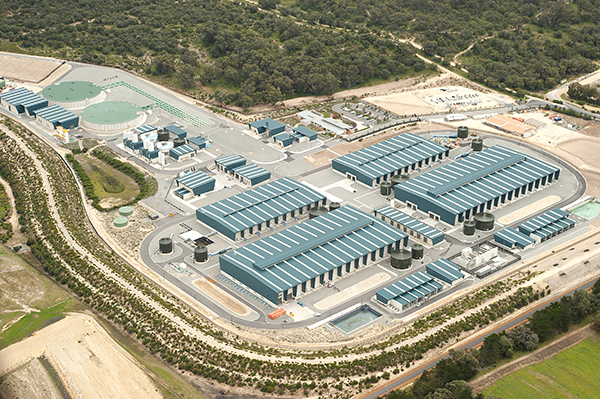
Source: SACYR
These were great steps towards meeting our current water demand but with a growing population, we have a continually growing need for more water. So inevitably, and quite soon actually, we will need to take more action regarding water infrastructure and innovation. We also have the commitment as a country to the UN Sustainable Development Goals (SDGs) that I introduced in last week’s blog. So, if desalination offers a secure, climate-independent and continuous supply of water, wouldn’t continuing to build more desalination plants help us reach the SDG targets?
Well no, not really.
The Water Corporation investigated the potential for desalination plants to meet all our future water needs in their 2009 Water Forever 50 Year Plan. They reported that if no investment was made to reduce Perth’s water use, a further ten 50 gigalitre desalination plants would be needed by 2060 to meet the water requirements. And at about $400 million a pop, that’s a huge infrastructure expense that they report would cause water bills to double. Also, for desalination plants to be a viable option, they need to be on the coast, close to the current supply network and have enough renewable energy to run sustainably (they need a lot of energy) – that kinda restricts where we can locate these additional ten plants and limits how effectively we can reach SGD targets…we now need some other solutions.
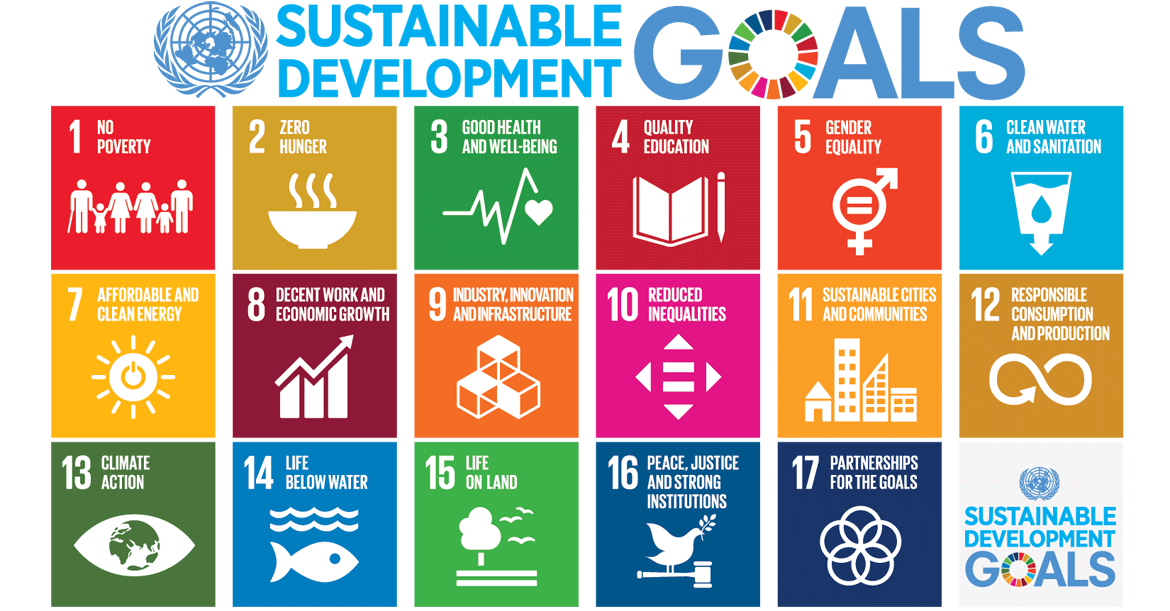
Let’s dive into the SDGs a bit more closely regarding water infrastructure so that solution development is guided by these targets. In this context, the most obviously related goals are 6 and 9: Clean Water and Sanitation and Innovation, Industry and Infrastructure.
Looking specifically into targets 6.3, 6.4 and 6.6 for Goal 6, the related focus includes increasing water recycling, safe reuse and water-use efficiency while sustainably withdrawing from and restoring water-related ecosystems. The most significant target for Goal 9 in this context is 9.4 which calls to “upgrade infrastructure and retrofit industries to make them sustainable, with increased resource-use efficiency and greater adoption of clean and environmentally sound technologies and industrial processes.”
There is no one solution for water infrastructure that is going to meet these targets and secure a reliable and economic source of water for Perth into the future. What we need then is an integrated solution (I picture a big family of solutions holding hands and working together…teamwork, yay!)
Traditionally, water utilities set up separate, centralised systems: one system to provide clean water and the other to deal with the dirty water, and a whole heap of pipes in between. This is still the infrastructure setup (worth billions and billions of dollars) that Perth relies on today. I don’t think this type of system is going anywhere and will actually play a pivotal role in the future integrated solution because it is reliable and effective, and with some innovation it can be retrofitted and upgraded to be more resource efficient.
Fitting in to this integrated infrastructure solution is movement towards a circular water economy, linking the previously separate sections of our centralised system. Our first shift into this space is the Groundwater Replenishment Scheme kicking off here in Perth to recharge our aquifers (restoring our water-related ecosystems, yes, sneaky touch on SDG Target 6.6). This infrastructure development excites me a lot and I can’t wait for Direct Potable Water to kick off out of this in the future!
The other key aspect of this solution is integrated, decentralised systems, particularly for new residential developments. These small-scale water infrastructure systems, at both community and household level, open doors for new ways to look at water treatment and reuse.
We are still (for the most part) accustomed to having 2 water pathways to our homes: clean water in and dirty water out. That means whenever we have a need for water, we use the perfectly clean, drinking quality, scheme water. I know, it’s cringey but … “we are literally flushing our drinking water down the toilet!” and drinking water is not cheap to produce so why use such highly treated water for this purpose when water of a lower quality would be perfectly suitable for the job. In fact, there is potentially 73% of water used in households that does not need to be of drinking water quality.
Enter…fit for purpose water!
Fit for purpose water is simply water that is of a quality that is suitable for its use. This means, we can reuse and recycle water more efficiently because we are not needing to carry everything away to clean it up – some can stay onsite for reuse for another purpose. Yes, introducing different water systems containing water of varying qualities adds complexity to water systems, but this is why I think this should start at a household or community scale. There are systems that already make this possible for new builds! Do yourself a favour and look into Josh’s House if you haven’t already. Josh Byrne, an environmental scientist and media personality, has built a 10 star energy efficient family home in Perth with an integrated water system that links rainwater, scheme water, greywater, blackwater and bore water. Josh explains it himself in this video if you want to know more.
Of course, this infrastructure comes with challenges. I talk on fit for purpose water more in my vlog for the week below and address some of the challenges and some possible solutions we could implement to overcome them particularly when it comes to decentralised, household fit for purpose systems.
Fit for purpose water will play an integral part in the future of water infrastructure whilst working towards the SDGs regarding both water and infrastructure. Fit for purpose is fit for the future!

 WATER WE WASTING?
This is great!! Love the idea of fit for purpose water. And I agree that it’s such a good idea to move towards decentralised, integrated systems as we step into the future.
LikeLike