Are schools the answer to wastewater outcomes?

“By 2050, there will be more plastic in our oceans than fish”

Greenbatch, from the 2016 World Economic Forum

The quote that started it all. Darren Lomman, Engineer, Social Innovator and Greenbatch CEO and Founder, was astounded to find out that a whole 0% (zilch, nada) of Western Australia’s plastic was reprocessed in WA when he first heard this quote back in 2016. Yeah, you heard that right, none of the plastic that you put in the recycling bin was being recycled here, or even in Australia for that matter. Rather, it was packaged up and sold to other countries for them to deal with. And that is only the portion of plastics that made it to the recycling bin in the first place – a lot doesn’t there and end up in landfills or the ocean!

So yeah, we have a plastic problem (or crisis), Darren wasn’t having a bar of it and so Greenbatch was born.


Before Greenbatch grew to the social enterprise that it is today (in just a few years), it was one guy (shredding bottles with scissors and an office paper shredder) with a drive to do something about a pretty important environmental issue.

But other countries have been recycling plastic for years, what makes this socially innovative?

Well Obama,

“Social innovation is the process of developing and deploying effective solutions to challenging and often systemic social and environmental issues in support of social progress.”

Stanford Graduate School of Business

I think Greenbatch achieved this in 2 ways…

One. Instead of trying to convince the government or investors to build a hugely expensive plastic recycling facility (which will eventually be needed), how about starting with partnerships and getting the public on board? So instead of being something that people have to do to follow government regulations, it becomes something they want to do. The beginning of project was crowd-funded, and they managed to raise $70,000 in 4 weeks with the help of social media.

Two. If you’re going to start recycling plastic, you’ve got to have an idea of what you’re going to recycling it into. Well, did you know that about 70% of our high schools have 3D printers? I didn’t, but Greenbatch did (or at least found this out) and they tapped into this. So they’re partnering with schools (now over 70 schools in Perth!). Getting school kids and teens on board to learn about the need for recycling. Greenbatch goes to the school to give them information about plastic waste, the schools collect plastic bottles, give them to Greenbatch and then will be able to use the 3D printer filament made from their bottles to create and learn whilst also learning the need for action to protect the future environment. Neat right? I love the idea. And it’s not just me who loves it, companies have jumped at the chance to partner with them and now the public come in droves on open days to deliver plastic that they want to see recycled here in Perth. They have plans to eventually recycle plastics into other products but it’s such a good idea to kick off in this way.

And, like you heard in my vlog, they’re partnering with other organisations to make this possible (like Engineers Without Borders, wooo!). Engineering companies have partnered by way of pro bono engineering and engineering students can volunteer with Greenbatch to get experience and work on a real project. The organisation also relies on community volunteers to sort plastics and collect plastics from events.

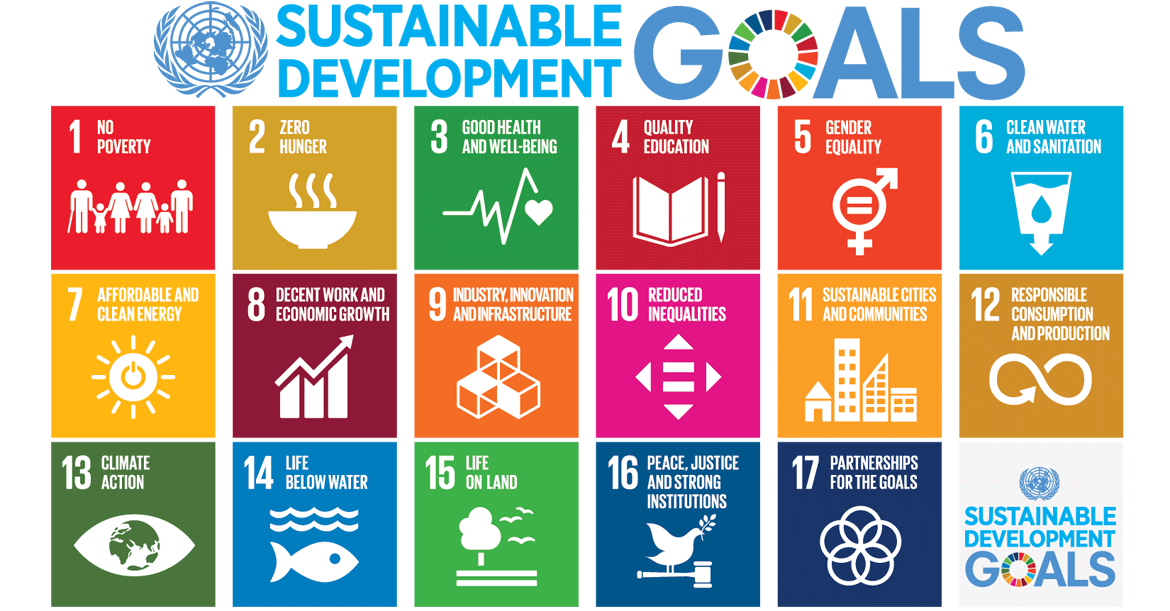
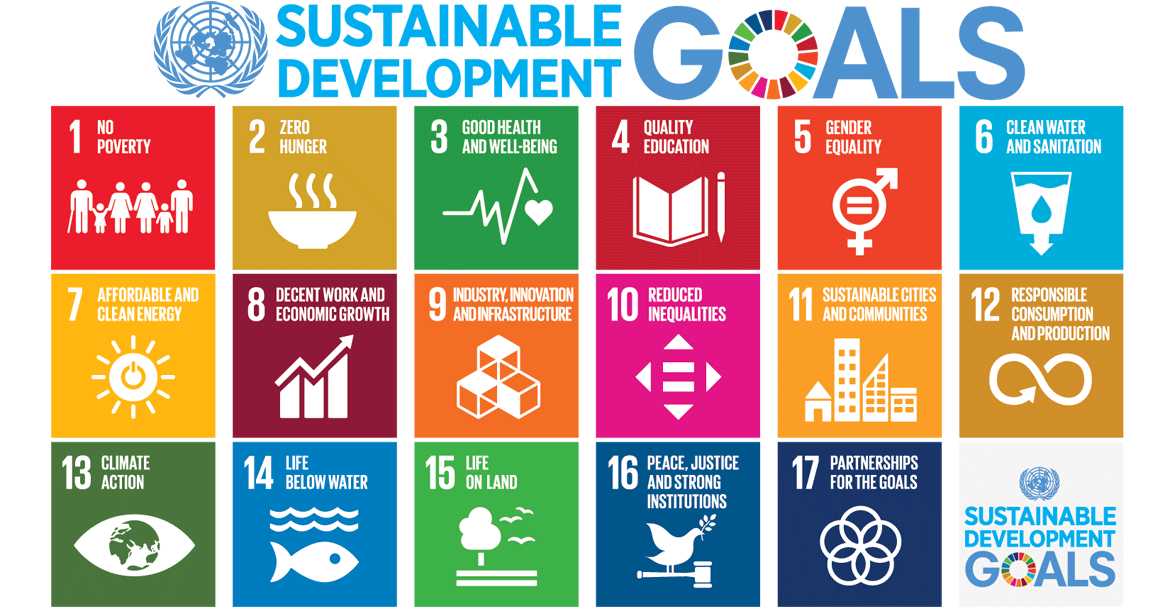
It’s pretty easy to see approaching this issue in this way can work towards the SDGs in more ways then one. I’ll start with the most obvious, the end goal is increasing recycling in our society and moving towards (slowly) a circular economy which is so critical when considering Goal 12: Responsible Consumption and Production. If you think back to that quote I started with, working towards preventing plastics ending up in our oceans is important for Goal 14: Life Below Water. And of course, all that pollution comes from the land so we can’t forget Goal 15: Life on Land. This is an approach that includes groups in society partnering together….Goal 17: Partnerships for the Goals! We can’t forget the positive impact this has on educating the community (Goal 4: Quality Education) and working towards sustainable cities and communities (Goal 11). And lastly, this type of project is using innovation to work toward developing the recycling industry here in WA (Goal 9!).
Woah, talk about 2 bird with one stone or…7 SDGs with one social innovation! Not only is Greenbatch paving the way for plastic recycling in WA, they are doing it in a really cool and socially innovative way. But, could an initiative such as this help advance the agenda of wastewater treatment and recycling?

Yes!


But how?

Well I think there is definitely room for a social innovation project to sweep in to get people talking, learning and caring about wastewater. But I think the really cool thing about Greenbatch that could be applied to social innovation for wastewater problems is the partnerships for success. Particularly the ones with schools! Water and recycling are often kept separate when we learn about them but there needs to be the connection between them! Hands on activities in schools that get kids caring about wastewater are important and then that’s a discussion that comes home with them.

Wouldn’t it be awesome if all schools (or like a group of schools) could create and build a demo sustainable house like a mini Josh’s House that integrates water reuse and energy efficiency? What about engineering students volunteering to get work experience with engineers working pro-bono to develop it? Or sustainable classrooms where water from the taps in classrooms (usually only used for washing hands) could be used for watering a garden in the school. That would really start a discussion within the school and in the community and I think that’s kinda what we need. There are a lot of issues faces wastewater treatment and recycling that could be address by improved education on it. But also, by encouraging learning about wastewater and gaining the interest of society, larger-scale technological approaches can be implemented with acceptance and enthusiasm by the public.
Can we regulate microplastics out of wastewater?

Thought we left microplastics behind us in “Are our clothes in wastewater?” Yeah I thought so too…But today we’re back with more on the little plastic bad boys that regularly appear in my nightmares (a bit dramatic, I know, but it’s thesis crunch time…I’m feeling it).

These itty-bitty plastics come up again today because we’re addressing the role of regulatory frameworks in wastewater engineering and in reaching the SDGs by 2030. I think microplastics have a reasonably big role to play. Now, I’ve covered the SDGs in my last two blogs, so I won’t explain in details today but let’s quickly home in (in pictorial form) on the goals I want to focus on.

So how does wastewater and microplastics fit in to this discuss on regulations and the SDGs?

Let’s start with a recap on the current ‘sitch’ on microplastics that I covered in my blog two weeks ago:

  • Wastewater treatment plants are a point source for microplastics into the environment.
  • Wastewater treatment volumes are large, so microplastic pollution to waterways is high.
  • Many microplastics do get removed but can still end up in the environment (via landfill or biosolids application).
  • Microplastics are not a great thing to have chillin’ in the environment – studies have shown that they can have some pretty nasty impacts.

We can pretty clearly see that microplastics can impact both life below water and life on land. We don’t yet have much research on the impact on land, but we know damn well (from findings from numerous studies) that microplastics in aquatic ecosystems are not good. Goal 14 targets specifically address plastic debris in oceans and implementing legal frameworks to meet this aspect of a sustainable future.

We also can’t forget that most microplastics in wastewater come from consumer products (from cleansing products to clothing) or industrial uses so it is also very important that SDG 12 is brought into the picture too. But we’ll come back to this a little later.  

Let’s get cracking on my thoughts on regulation because I know I’m going to get carried away.

Question número uno: Would microplastic regulations targeting wastewater treatment be effective?

Hmmm, I think not. Firstly, legislation needs to be specific and we just don’t know enough about microplastics at this stage to implement specific discharge limits – like, do you group all microplastics together or specify the polymer type? And even if we did know exactly what microplastics there were, there are a lot! Eww, no, that’s a headache in itself. Stipulations on removal efficiency won’t really help the issue either because it will just divert microplastics into sludge – another place we don’t want them to be.

Okay, so don’t regulate at the wastewater treatment plants. What about regulating the products where microplastics originate? Oh yep, this is where SDG 12 starts to kick in. Let’s talk about a little bit of responsible production. Yes, all producers of goods should be considering the entire lifecycle of their products. This 100% includes products that contain primary microplastics or will produce secondary microplastics.

This is still not a simple thing to do. Like I said, there are a lot of different types of microplastics originating from a multitude of sources. Global governments have kinda made tracks towards this with what they saw as an “easy” microplastics to deal with… Microbeads (you know, the kind we used to scrub our face with?).While other countries went for a ban, Australia opted for a voluntary phase-out, promising to introduce a ban if the phase-out period was unsuccessful by July 2018. Well it’s now September 2019. Does that mean the voluntary phase-out stopped the use of all microbeads in Australia? Unfortunately, not. The government deemed that most had been removed so there was no requirement for a ban, and they would continue monitoring. While that’s fair if introducing a regulation included a lot of work but with this approach, I can just foresee a lapse in monitoring and producers sneaking microplastics back into products or using microplastics through loop-holes in the framework.

One of these loopholes is that that they called for removal of ‘rinse-off’ microplastics. This ambiguous terminology has spiked much debate, not just in Australia, regarding what exactly that covered. Flora and Fauna International developed some very important (and clear) specifications for the proposed ban which should be adopted when rolling out such a regulation.

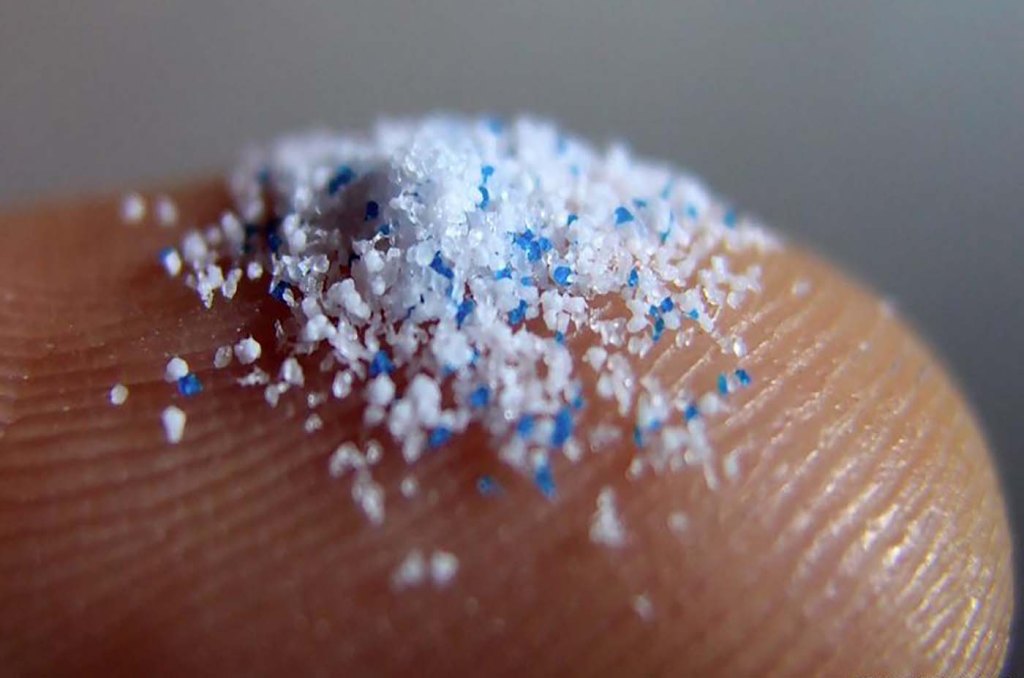
Microbeads
Source: Avada Environmental

With that said, microbeads are only a small contributor to microplastics in wastewater. Fibres are another hurdle and again where clear specifications are required. Does the regulation requirement fall into the clothing manufacturer space or the washing machine manufacturer space? Or both? Or neither? Is it up to the consumer to make choices that limit their microplastics pollution? Do we limit the number of microfibres each person is allowed to release to wastewater each day? I’m all about some personal accountability but that’s pipe dream (get it?), how on earth would we ever measure that?

See? It’s a tricky space.

So maybe we’re not quite at a stage where we can merely implement a few regulations and launch ourselves towards gold stars in achieving SGDs 12, 14 and 15. There is a lot of work behind it. But there is definitely room for a framework to be developed that at least makes strides towards them.

So, what do I think a practical framework looks like?

In my mind, wastewater treatment plants aren’t completely off the hook. They are the point source to the environment, so they are critical in information gathering. For any regulatory framework to be effective, we’ve really got to know some specifics. What microplastics are there? Where are they coming from? What harm are they causing?

Then, we can have a combined approach. Regulations can be introduced to stop pathways that clearly link microplastics to wastewater (like the microbead approach – but just a bit more specific and an actual regulation that all producers must comply with). And, of course, we can’t forget the importance of education in this framework. Most people just aren’t aware of what leaves their house to be dealt with at a wastewater treatment plant. This critically needs to be addressed! Education is truly at the heart of achieving all SGDs.  


Awesome read for more on the challenges facing microplastic regulation with a freshwater focus: Freshwater Microplastics: Challenges for Regulation and Management

Water we going to do about our future water needs?


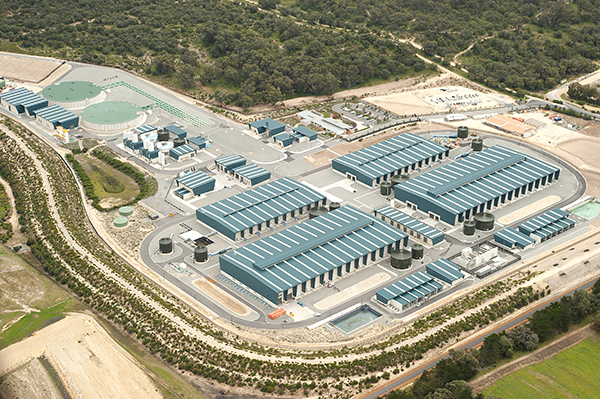
When our dams started drying up and Perth could no longer rely on rainwater and groundwater to meet our growing water demands, our Government invested big in water infrastructure. Since 2001, there has been $2.2 billion spent on climate-independent water infrastructure. Of this, desalination plants have had the biggest impact in providing a constant supply of water. Since the commissioning of the Perth Seawater Desalination Plant in 2006 and the Southern Seawater Desalination Plant in 2011, desalination water has risen to be the biggest contributor to Perth’s Integrated Water Supply Scheme (IWSS); now contributing 48%.

Southern Seawater Desalination Plant
Source: SACYR

These were great steps towards meeting our current water demand but with a growing population, we have a continually growing need for more water. So inevitably, and quite soon actually, we will need to take more action regarding water infrastructure and innovation. We also have the commitment as a country to the UN Sustainable Development Goals (SDGs) that I introduced in last week’s blog. So, if desalination offers a secure, climate-independent and continuous supply of water, wouldn’t continuing to build more desalination plants help us reach the SDG targets?

Well no, not really.

The Water Corporation investigated the potential for desalination plants to meet all our future water needs in their 2009 Water Forever 50 Year Plan. They reported that if no investment was made to reduce Perth’s water use, a further ten 50 gigalitre desalination plants would be needed by 2060 to meet the water requirements. And at about $400 million a pop, that’s a huge infrastructure expense that they report would cause water bills to double. Also, for desalination plants to be a viable option, they need to be on the coast, close to the current supply network and have enough renewable energy to run sustainably (they need a lot of energy) – that kinda restricts where we can locate these additional ten plants and limits how effectively we can reach SGD targets…we now need some other solutions.

Let’s dive into the SDGs a bit more closely regarding water infrastructure so that solution development is guided by these targets. In this context, the most obviously related goals are 6 and 9: Clean Water and Sanitation and Innovation, Industry and Infrastructure.

Looking specifically into targets 6.3, 6.4 and 6.6 for Goal 6, the related focus includes increasing water recycling, safe reuse and water-use efficiency while sustainably withdrawing from and restoring water-related ecosystems. The most significant target for Goal 9 in this context is 9.4 which calls to “upgrade infrastructure and retrofit industries to make them sustainable, with increased resource-use efficiency and greater adoption of clean and environmentally sound technologies and industrial processes.”

There is no one solution for water infrastructure that is going to meet these targets and secure a reliable and economic source of water for Perth into the future. What we need then is an integrated solution (I picture a big family of solutions holding hands and working together…teamwork, yay!)

Traditionally, water utilities set up separate, centralised systems: one system to provide clean water and the other to deal with the dirty water, and a whole heap of pipes in between. This is still the infrastructure setup (worth billions and billions of dollars) that Perth relies on today. I don’t think this type of system is going anywhere and will actually play a pivotal role in the future integrated solution because it is reliable and effective, and with some innovation it can be retrofitted and upgraded to be more resource efficient.

Fitting in to this integrated infrastructure solution is movement towards a circular water economy, linking the previously separate sections of our centralised system. Our first shift into this space is the Groundwater Replenishment Scheme kicking off here in Perth to recharge our aquifers (restoring our water-related ecosystems, yes, sneaky touch on SDG Target 6.6). This infrastructure development excites me a lot and I can’t wait for Direct Potable Water to kick off out of this in the future!

The other key aspect of this solution is integrated, decentralised systems, particularly for new residential developments. These small-scale water infrastructure systems, at both community and household level, open doors for new ways to look at water treatment and reuse.

We are still (for the most part) accustomed to having 2 water pathways to our homes: clean water in and dirty water out. That means whenever we have a need for water, we use the perfectly clean, drinking quality, scheme water. I know, it’s cringey but … “we are literally flushing our drinking water down the toilet!” and drinking water is not cheap to produce so why use such highly treated water for this purpose when water of a lower quality would be perfectly suitable for the job. In fact, there is potentially 73% of water used in households that does not need to be of drinking water quality

Enter…fit for purpose water!

Fit for purpose water is simply water that is of a quality that is suitable for its use. This means, we can reuse and recycle water more efficiently because we are not needing to carry everything away to clean it up – some can stay onsite for reuse for another purpose. Yes, introducing different water systems containing water of varying qualities adds complexity to water systems, but this is why I think this should start at a household or community scale. There are systems that already make this possible for new builds! Do yourself a favour and look into Josh’s House if you haven’t already. Josh Byrne, an environmental scientist and media personality, has built a 10 star energy efficient family home in Perth with an integrated water system that links rainwater, scheme water, greywater, blackwater and bore water. Josh explains it himself in this video if you want to know more.

Of course, this infrastructure comes with challenges. I talk on fit for purpose water more in my vlog for the week below and address some of the challenges and some possible solutions we could implement to overcome them particularly when it comes to decentralised, household fit for purpose systems.

Fit for purpose water will play an integral part in the future of water infrastructure whilst working towards the SDGs regarding both water and infrastructure. Fit for purpose is fit for the future!

Are our clothes ending up in wastewater?

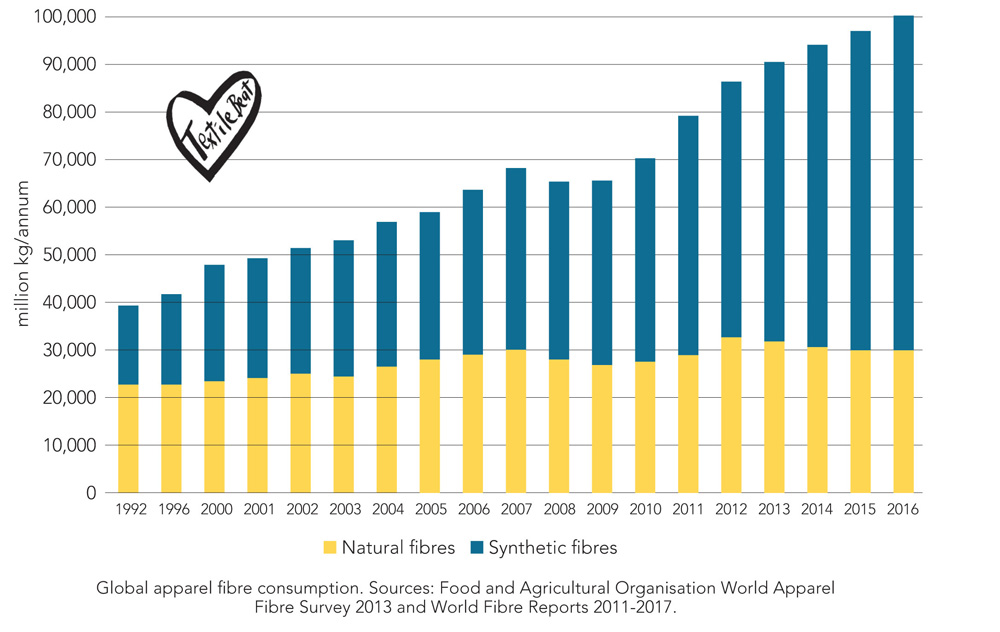
Let’s go back 12 years. It’s 2007, I was wearing a denim mini skirt over cropped leggings, Britney had shaved her head and polyester took over as the worlds dominate fibre. While I moved on from that questionable fashion choice (It was in at the time, I promise!) and Britney made it through those rough years, the rise in polyester didn’t falter. When natural fibre industries reached capacity (we only have so much land for cotton farms) and we demanded more clothes, polyester slipped in to fill that void. And we continued to demand more clothes. Stretchier clothes. Stretchier clothes that wouldn’t absorb sweat (yes activewear, I’m talking about you).

And it’s not just polyester. Demand for other synthetic fibres grew too. The image below is from an article by Textile Beat – by 2016 synthetic fibres had surpassed two thirds of the global market.

Is this reason to be concerned?

Well, yes! But why?

I’m sure you’ve all heard about the abundance of microplastics that have been found in oceans around the world. Microplastics are small plastics fragments (under 5mm in length) and they are being found left, right and centre in global waterways, inside the stomachs of marine animals and in drinking water!

Studies are now estimating that up to 20% to 35% of those microplastics are fibres from synthetic clothing!

How are fibres from my Lorna Jane leggings (who am I kidding, *Kmart leggings) getting into the stomach of fish?

A 2011 study by Brown et. al. reported over 1900 fibres are released from a single polyester fleece garment per wash. A 2016 study out of Plymouth University found up to 700,000 fibres released from a 6kg wash of synthetic clothes. That’s a lot of teeny tiny plastics travelling to wastewater treatment plants.

The thing is, wastewater treatment plants are not designed to remove microfibres, or any microplastics for that matter. Many studies have shown that a lot do get removed through the various treatment steps, including this 2014 study by Dris et. al. who found that between 85% to 95% are removed from wastewater in a secondary treatment plant. But, such high volumes of water pass through these plants every day that the small-ish percentage that makes its way to the plant effluent (sent to oceans) represents a large number. That same study found the amount of microplastics discharged from the plant to be over 8 BILLION per day. Umm what? That’s huge. Other studies have found similar things too – a 2018 review by Sun et. al. gives a really great summary of what has been found to date in similar studies – but there is still a lot more to find.

What about that 85% to 95% that is removed? Where is it going? All microplastics entering wastewater treatment plants must go somewhere (IN=OUT). If these are removed during the grit screening process, these plastics will be destined for landfill. The others will be collected in the biosolids sludge, some of which is used on agricultural land. What is the impact of microplastics in these contexts? There is even less research on this (Sun addresses in that review paper). Regardless, more likely than not, the microfibres that make their way into wastewater from our washing machines are released to the environment.

To be fair, clothes of all fabrics shed in the wash. So why aren’t we so concerned with natural microfibres making their way through wastewater and into the environment? Well, researchers aren’t ruling out natural fibres negatively impacting the environment, but most natural fibres biodegrade whereas synthetic fibres don’t – once they are out there, they’re going to be there for a long time. Plastics also act like sponges for toxins so these tiny particles can carry micropollutants through the environment.

This is obviously an issue that needs to be addressed.  In 2015, the United Nations launched a global call for action – The Sustainable Development Goals (SDGs). When you look at these goals, this issue falls under so many of them. It is directly addressed by Goal 6 – Goal 6.3 is literally on improving water quality by reducing pollution. But this issue can equally fall under Goals 12, 14 and 15…and probably more!

“The 17 Sustainable Development Goals (SDGs) are the world’s best plan to build a better world for people and our planet by 2030.”

SUSTAINABLEDEVELOPMENT.UN.ORG

So, what’s the solution?

At this stage, we don’t really have one.

Ban synthetic fabrics? Polyester and other synthetic fibres don’t seem to be going away anytime soon. Tecnon OrbiChem projects that by 2025, the global production of polyester is going to be at nearly triple that of 2007.

There obviously needs to be a lot more research and development in this field. Some of the questions to be answered are:

  • How effectively could filters be used in washing machines to combat this?
  • What washing machine cycles and settings are best to minimise microfibre break-off?
  • Could washing powder be specifically designed to protect the integrity of synthetic fibre?
  • Can synthetic fibres be designed to be more robust?
  • And, the list goes on…

There are some products available, such as the Guppy Bag and Cora Ball, which can reduce the amount of microfibres leaving your washing machine. But these require the consumer to be educated on the need to use them, buy them and then actually use it.

Obvious things we can start doing today are to wash our clothes less (most clothes don’t need washing after every wear) and try to buy clothes made from natural fibres, or at least a blend of synthetic and natural.

There is much more to discover on this topic but for now we need to start talking about this. Talk to your friends and family! Spread the word!

I highly recommend downloading the SDGs in Action App and start learning more about what you can do to work towards all the goals!

If you want to know more or are just interested, I found a cute video by The Story of Stuff Project that explains the story of microfibres, have a watch.

Design a site like this with WordPress.com
Get started