Let’s go back 12 years. It’s 2007, I was wearing a denim mini skirt over cropped leggings, Britney had shaved her head and polyester took over as the worlds dominate fibre. While I moved on from that questionable fashion choice (It was in at the time, I promise!) and Britney made it through those rough years, the rise in polyester didn’t falter. When natural fibre industries reached capacity (we only have so much land for cotton farms) and we demanded more clothes, polyester slipped in to fill that void. And we continued to demand more clothes. Stretchier clothes. Stretchier clothes that wouldn’t absorb sweat (yes activewear, I’m talking about you).
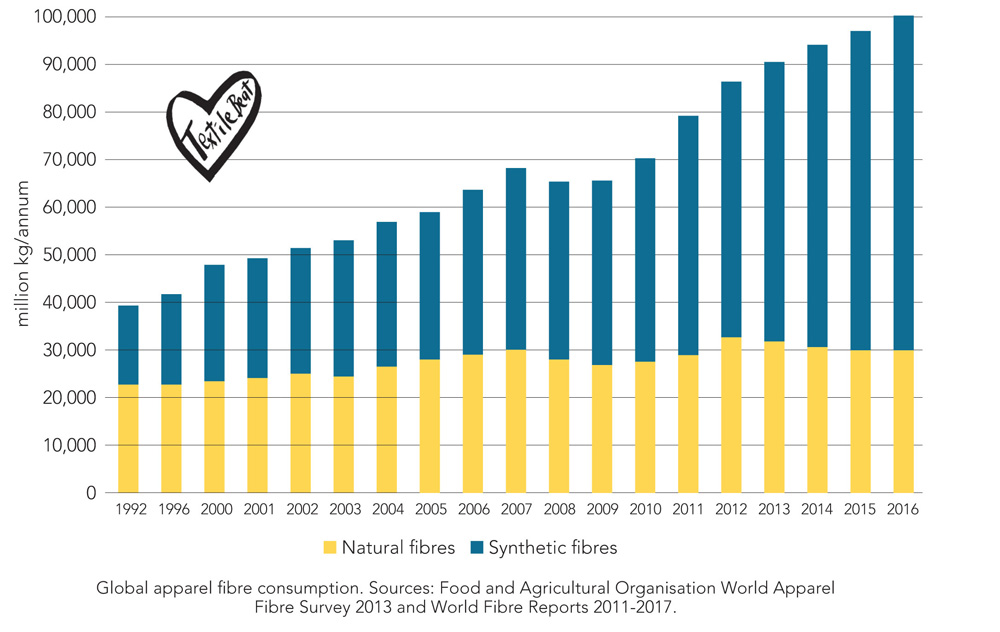
And it’s not just polyester. Demand for other synthetic fibres grew too. The image below is from an article by Textile Beat – by 2016 synthetic fibres had surpassed two thirds of the global market.
Is this reason to be concerned?
Well, yes! But why?
I’m sure you’ve all heard about the abundance of microplastics that have been found in oceans around the world. Microplastics are small plastics fragments (under 5mm in length) and they are being found left, right and centre in global waterways, inside the stomachs of marine animals and in drinking water!
Studies are now estimating that up to 20% to 35% of those microplastics are fibres from synthetic clothing!
How are fibres from my Lorna Jane leggings (who am I kidding, *Kmart leggings) getting into the stomach of fish?
A 2011 study by Brown et. al. reported over 1900 fibres are released from a single polyester fleece garment per wash. A 2016 study out of Plymouth University found up to 700,000 fibres released from a 6kg wash of synthetic clothes. That’s a lot of teeny tiny plastics travelling to wastewater treatment plants.
The thing is, wastewater treatment plants are not designed to remove microfibres, or any microplastics for that matter. Many studies have shown that a lot do get removed through the various treatment steps, including this 2014 study by Dris et. al. who found that between 85% to 95% are removed from wastewater in a secondary treatment plant. But, such high volumes of water pass through these plants every day that the small-ish percentage that makes its way to the plant effluent (sent to oceans) represents a large number. That same study found the amount of microplastics discharged from the plant to be over 8 BILLION per day. Umm what? That’s huge. Other studies have found similar things too – a 2018 review by Sun et. al. gives a really great summary of what has been found to date in similar studies – but there is still a lot more to find.
What about that 85% to 95% that is removed? Where is it going? All microplastics entering wastewater treatment plants must go somewhere (IN=OUT). If these are removed during the grit screening process, these plastics will be destined for landfill. The others will be collected in the biosolids sludge, some of which is used on agricultural land. What is the impact of microplastics in these contexts? There is even less research on this (Sun addresses in that review paper). Regardless, more likely than not, the microfibres that make their way into wastewater from our washing machines are released to the environment.
To be fair, clothes of all fabrics shed in the wash. So why aren’t we so concerned with natural microfibres making their way through wastewater and into the environment? Well, researchers aren’t ruling out natural fibres negatively impacting the environment, but most natural fibres biodegrade whereas synthetic fibres don’t – once they are out there, they’re going to be there for a long time. Plastics also act like sponges for toxins so these tiny particles can carry micropollutants through the environment.
This is obviously an issue that needs to be addressed. In 2015, the United Nations launched a global call for action – The Sustainable Development Goals (SDGs). When you look at these goals, this issue falls under so many of them. It is directly addressed by Goal 6 – Goal 6.3 is literally on improving water quality by reducing pollution. But this issue can equally fall under Goals 12, 14 and 15…and probably more!
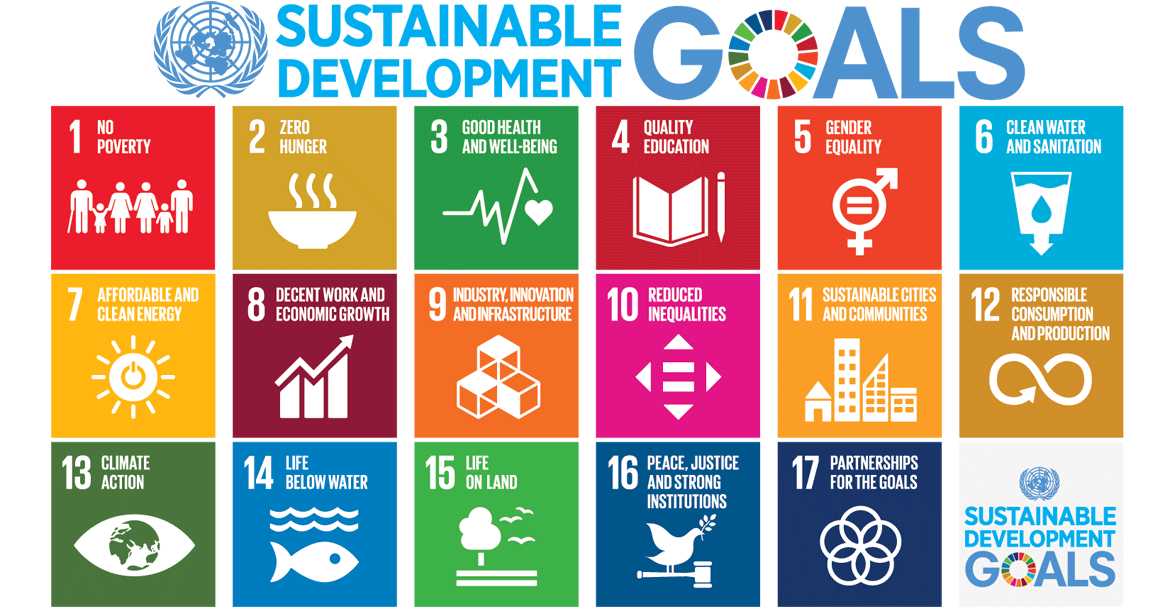
“The 17 Sustainable Development Goals (SDGs) are the world’s best plan to build a better world for people and our planet by 2030.”
SUSTAINABLEDEVELOPMENT.UN.ORG
So, what’s the solution?
At this stage, we don’t really have one.
Ban synthetic fabrics? Polyester and other synthetic fibres don’t seem to be going away anytime soon. Tecnon OrbiChem projects that by 2025, the global production of polyester is going to be at nearly triple that of 2007.
There obviously needs to be a lot more research and development in this field. Some of the questions to be answered are:
- How effectively could filters be used in washing machines to combat this?
- What washing machine cycles and settings are best to minimise microfibre break-off?
- Could washing powder be specifically designed to protect the integrity of synthetic fibre?
- Can synthetic fibres be designed to be more robust?
- And, the list goes on…
There are some products available, such as the Guppy Bag and Cora Ball, which can reduce the amount of microfibres leaving your washing machine. But these require the consumer to be educated on the need to use them, buy them and then actually use it.
Obvious things we can start doing today are to wash our clothes less (most clothes don’t need washing after every wear) and try to buy clothes made from natural fibres, or at least a blend of synthetic and natural.
There is much more to discover on this topic but for now we need to start talking about this. Talk to your friends and family! Spread the word!
I highly recommend downloading the SDGs in Action App and start learning more about what you can do to work towards all the goals!
If you want to know more or are just interested, I found a cute video by The Story of Stuff Project that explains the story of microfibres, have a watch.


 WATER WE WASTING?
Nice work! Really interesting!
It’s hard to address microfibre because polyester cloth is already inseparable from our lives. How about the cloth made by natural cotton, does it cause the same consequence? I also heard the microplastic is falling out of the sky with snow in Arctic, which is appalling too.
LikeLiked by 1 person
Thanks AGoodBlog!
Researchers aren’t 100% sure on the negative impacts of natural cloths. They still shed in the wash and microfibres from them do enter wastewater treatment plants. But, the main difference is that most natural fibres will biodegrade over time and synthetic ones won’t. The other big concern is that the synthetic microfibres (being plastic) will absorb and release toxins into the environment. Research on this is really only in its early days…much more to find out!
Very interesting about the microplastic falling from the sky – I’ll have to look that up!
LikeLiked by 1 person
So cool to see a suspected microplastic up close and I loved all your suggestions for change. I’m definitely going to think twice about the clothes I buy in the future!
LikeLike
awesome work Hayley 🙂 so clear and well documented! awesome vlog 🙂
LikeLike